Understanding the Well-Being of LGBTQI+ Populations
Feature Story
By Megan Lowry
Last update June 29, 2020
The National Academies of Sciences, Engineering, and Medicine are currently conducting a study to review available data on the well-being of LGBTQI+ populations and future research needs for this community. The study will examine a wide range of factors that influence LGBTQI+ individuals’ lives, including families and social relationships, stigma, social engagement, housing, justice systems, and more.
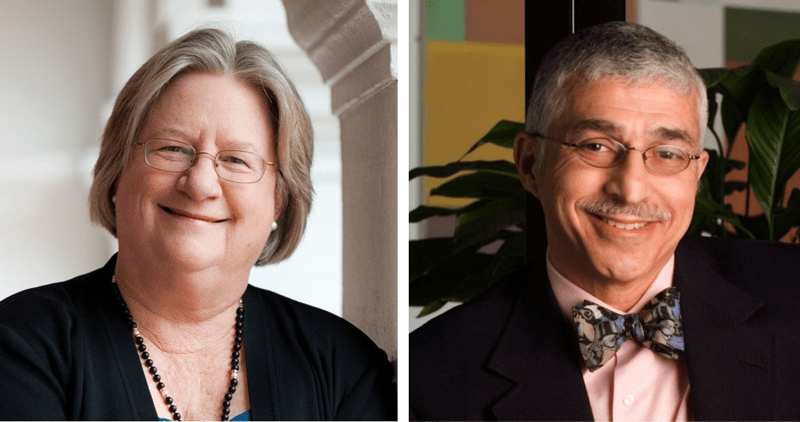
Co-chairs of the study committee, Charlotte J. Patterson, professor of psychology and chair of the department of women, gender, and sexuality at the University of Virginia, and Martín-José Sepúlveda, retired vice president, IBM Corp., answered some key questions about the study.
Q: Can you tell us about the purpose and goals of your study?
Patterson: This study brings together a group of experts to review the available evidence and identify future research needs related to the well-being of LGBTQI+ people throughout their lives. The committee focused on six domains of well-being: families and social relationships; community engagement; physical and mental health; education; economics, including employment, compensation, and housing; and the legal and policy landscape. Our aim has been to provide an up-to-date overview of the health and well-being of LGBTQI+ people in the United States today, and also to identify gaps in scientific knowledge in these domains.
Q: How is your study related to the 2011 National Academies report The Health of Lesbian, Gay, Bisexual, and Transgender People: Building a Foundation for Better Understanding?
Sepúlveda: In 2011, the National Academies issued The Health of Lesbian, Gay, Bisexual, and Transgender People, a landmark report that focused on the state of science on the physical and mental health of lesbian, gay, bisexual, and transgender people. The report reviewed scientific studies of LGBT people’s health, identified gaps and opportunities to further this research, and made recommendations for an NIH approach to help close these knowledge gaps.
Our current study overlaps with the 2011 report by updating the state of scientific knowledge on the physical and mental health of LGBT people as well as reviewing persistent gaps in this knowledge. However, the current report goes much further and is broader in scope by also considering well-being (satisfaction with life, fulfillment, and positive functioning) and by discussing the multiple systems in society that affect well-being including health, family, community, housing, education, economics, and law. Further, the current study includes queer and intersex people, i.e. LGBTQI+.
Q: What kinds of activities has the committee engaged in so far to answer its research questions?
Patterson: The committee is taking a multipronged approach toward gathering and analyzing the necessary evidence to complete this study. We are reviewing published literature, listening to testimony from experts in a variety of topic areas central to our charge, and have held a number of in-person open-session conversations to engage with key stakeholders and community leaders. At our first meeting, we heard from the study’s sponsors in order to clarify their goals for the project, and from representatives of LGBTQI+ advocacy groups to learn more about their perspectives.
At our second in-person meeting, the committee convened five panels of scholars and advocates to provide input for the committee: one on culture, representation, and community frameworks; another on intersex individuals and families; a third on non-binary and plurisexual identities; a panel on sexual and gender diversity law and policy; and the final one focused on civic engagement.
We’ve also been working in closed session to discuss what we’ve learned and to draft our final report.
Q: How have you involved LGBTQI+ communities in your work on the report?
Sepúlveda: Working to involve scholars, stakeholders, and representatives of different LGBTQI+ communities and subgroups has been an essential part of our committee’s efforts. Despite the remarkable and varied expertise available among members of the committee, there were inevitably areas where greater knowledge was required.
For example, the committee asked Jane Simoni from the University of Washington to give us a presentation on Two-Spirit American Indian/Alaska Native health, and Dagoberto Bailon of the Trans Queer Pueblo has also presented on Trans Queer Resistance. We’ve tried to pull in as many speakers from diverse viewpoints, disciplines, and backgrounds as possible. Todd Snovel of the Pennsylvania Commission on LGBTQ Affairs, Sean Saifa Wall from the Intersex Justice Project, and Khadija Khan from the Muslim Youth Leadership Council of Advocates for Youth (and several others) have also helped supplement the committee’s expertise.
Q: How do you imagine your findings and recommendations could be used, and by whom, once they are released?
Patterson: We are hopeful that our review of the health and well-being of LGBTQI+ people will be helpful in encouraging researchers to close gaps in scientific knowledge and methods in these areas. We also hope that the report will stimulate action to educate and inform policymakers and the public, and that it initiates activities that help to reduce disparities endured by LGBTQI+ people.
Learn more about this study.
Featured Publication
Understanding the Well-Being of LGBTQI+ Populations
Consensus Study Report
·2020
The increase in prevalence and visibility of sexually gender diverse (SGD) populations illuminates the need for greater understanding of the ways in which current laws, systems, and programs affect their well-being. Individuals who identify as lesbian, gay, bisexual, asexual, transgender, non-binary...
View details
More like this


Discover
Events
Right Now & Next Up
Stay in the loop with can’t-miss sessions, live events, and activities happening over the next two days.
NAS Building Guided Tours Available!
Participate in a one-hour guided tour of the historic National Academy of Sciences building, highlighting its distinctive architecture, renowned artwork, and the intersection of art, science, and culture.